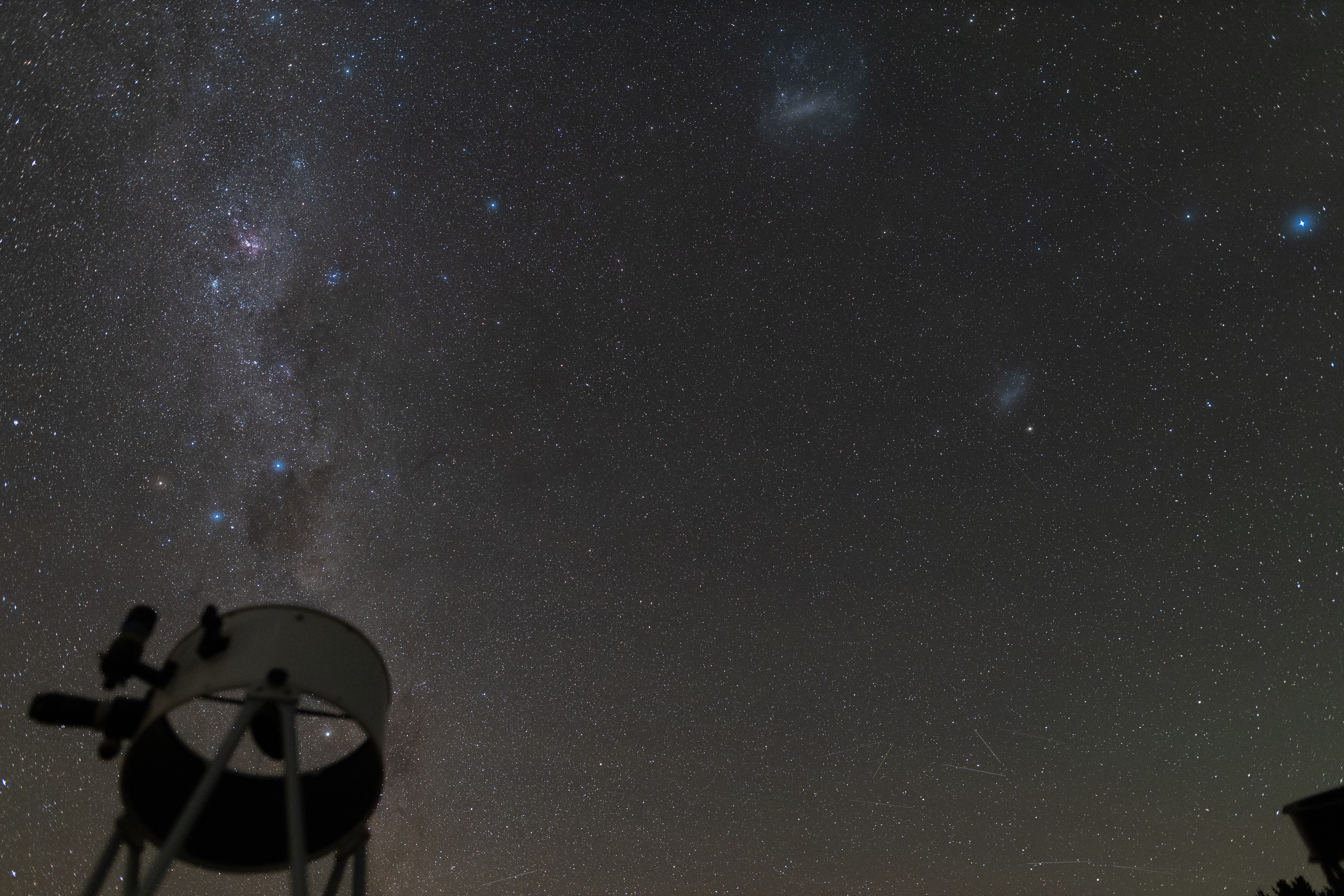
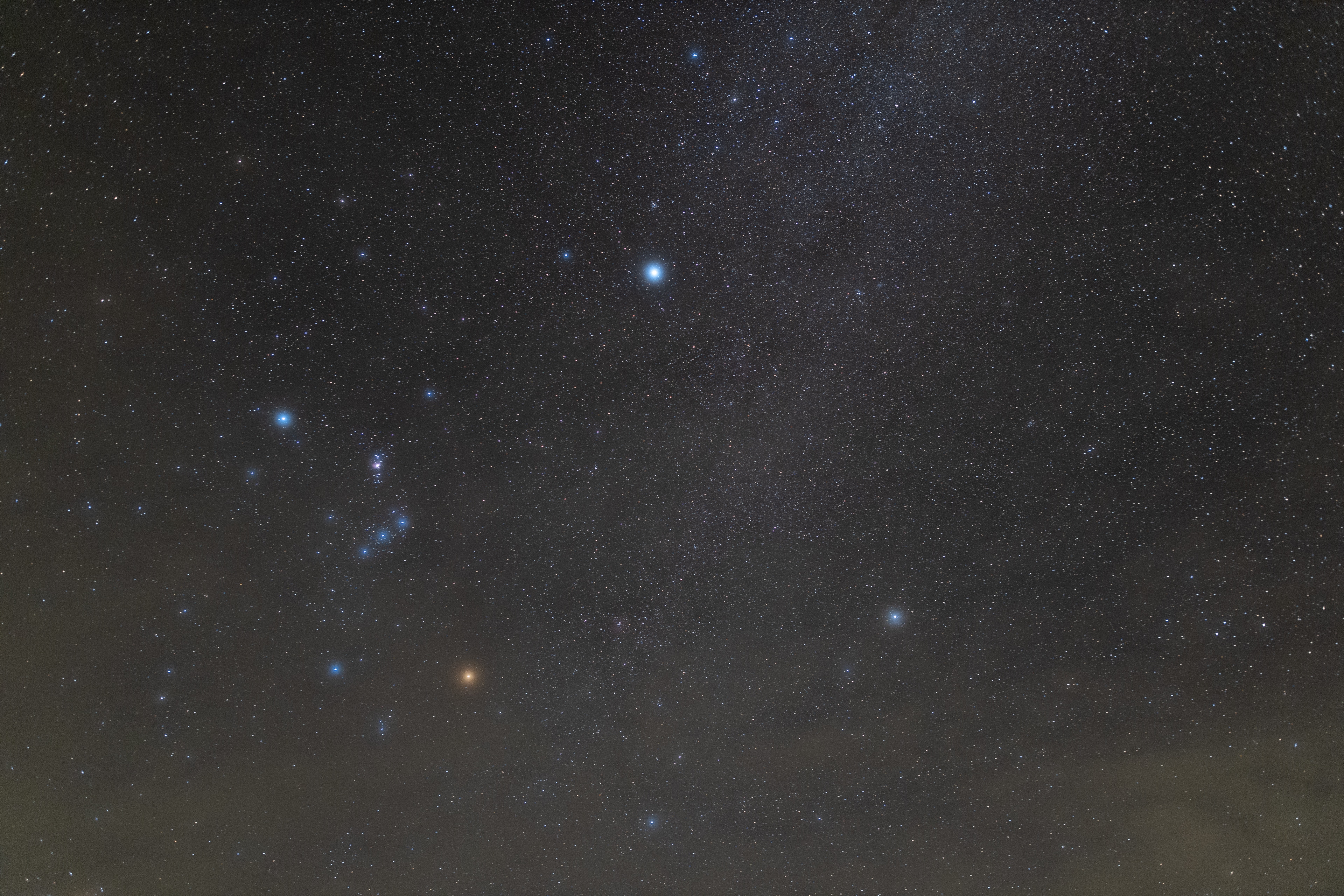
Here in New Zealand, Taurus the Cow and Sirius the Dog slowly shift westward across the sky each day — not because they are going anywhere, but because our vantage point changes as Earth orbits the Sun. While we may be losing a sheep in February (Aries is long gone from the sky), we get a Beehive (M44, or the Praesepe in Latin), the cluster that inhabits Cancer the Crab. It’s only a star cluster, but we’ll take it. In the middle of the ecliptic, the Twins roll in doing their cartwheel, and we see them upside down. As the night goes on, they, too, roll out to the west. The stars of the ecliptic — the zodiacal band — sit low in the summer February night sky. Leo the Lion pokes his head up from the east to remind everyone that this is, after all, a safari.
Now is the time to check out the Doppelgänger clusters — the Pleiades and the Southern Pleiades. Grab your binoculars (and maybe a tripod, unless you enjoy arm cramps) to explore the Beehive Cluster, the False Cross, and deep-sky gems like the Sombrero Galaxy and Omega Centauri. And just for fun: the Ghost of Jupiter is hanging out in Hydra, while the real Jupiter is in Gemini — both visible in roughly the same slice of sky in 2026, if you feel like comparing them.